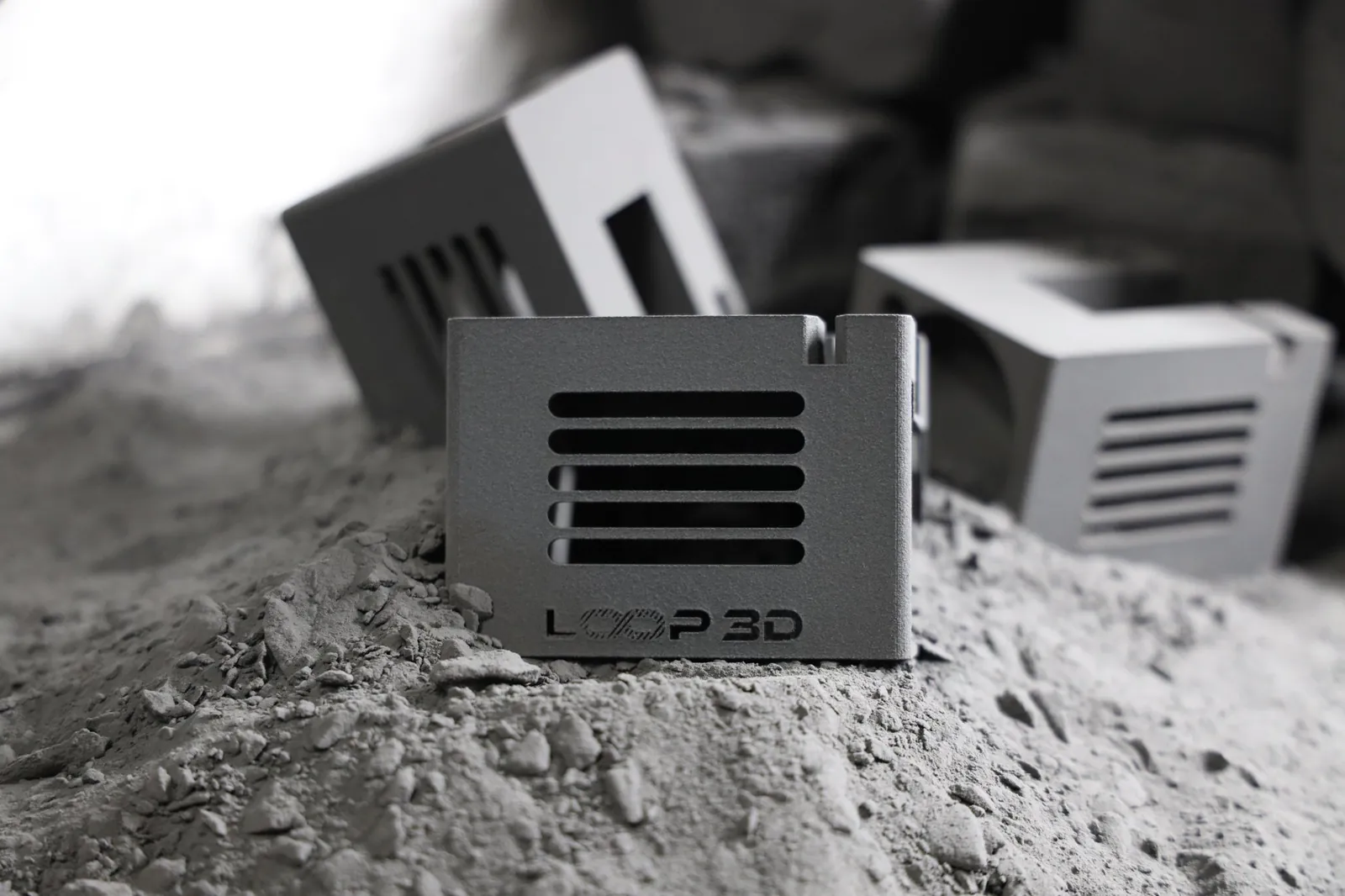
Designing parts for SLS 3D printing
The key numbers for designing PA12 nylon parts that print well: wall thickness, holes, clearances, escape holes and tolerances. Our engineers check every file before printing, so if something is close to a limit, we will tell you.
SLS design rules
| Feature | Recommended | Notes |
|---|---|---|
| Minimum wall thickness | 0.5 mm | Use 1 mm or more for walls that carry load or are long and unsupported. |
| Dimensional tolerance | ±0.3% (at least ±0.3 mm) | Tell us about critical dimensions when you order. |
| Minimum hole diameter | 1.5 mm | Smaller holes can fill with fused powder. Drill or ream for a precise fit. |
| Minimum pin or post diameter | 0.8 mm | Thin pins print, but thicker ones are stronger. |
| Embossed and engraved detail | 1 mm high or deep | Text with a line width of at least 0.5 mm stays readable. |
| Clearance between moving parts | 0.5 mm | For hinges, chains and assemblies printed in one piece. |
| Escape holes for hollow parts | Two holes, 5 mm or larger | Lets us remove the unfused powder from inside. |
| Maximum part size | 400 x 400 x 540 mm | Larger parts can be split and joined. |
General guidance for PA12 nylon on our SLS systems. Results depend on geometry, size and orientation. PA12 nylon material data.
Get better parts for less
Hollow thick sections
Solid blocks take longer to cool and can shrink or warp. Hollowing a thick part with escape holes saves material and cost and keeps it flat.
No supports needed
The surrounding powder holds the part as it builds, so overhangs, internal channels and interlocking parts need no support structures.
Add ribs, not mass
For stiffness, add ribs or a lattice instead of thickening the whole wall. Large flat plates stay flatter with ribs.
Send STEP when you can
We accept STL and STEP. STEP keeps exact geometry, which helps when holes, threads or fits matter.
SLS design questions
What is the minimum wall thickness for SLS?
0.5 mm. For walls that carry load, or long walls with no support from the rest of the part, we recommend 1 mm or more.
How accurate are SLS parts?
Typically ±0.3%, with a lower limit of ±0.3 mm. Accuracy depends on part size, geometry and orientation, so tell us which dimensions are critical.
Can SLS print moving parts in one piece?
Yes. Leave at least 0.5 mm clearance between the moving surfaces so the powder between them can be removed.
Will you check my design?
Yes. Our engineers review every order before printing and will tell you if a wall, hole or gap is likely to cause a problem.
Ready to print?
Upload your STL or STEP file for an instant price. Our engineers check your design before printing.